
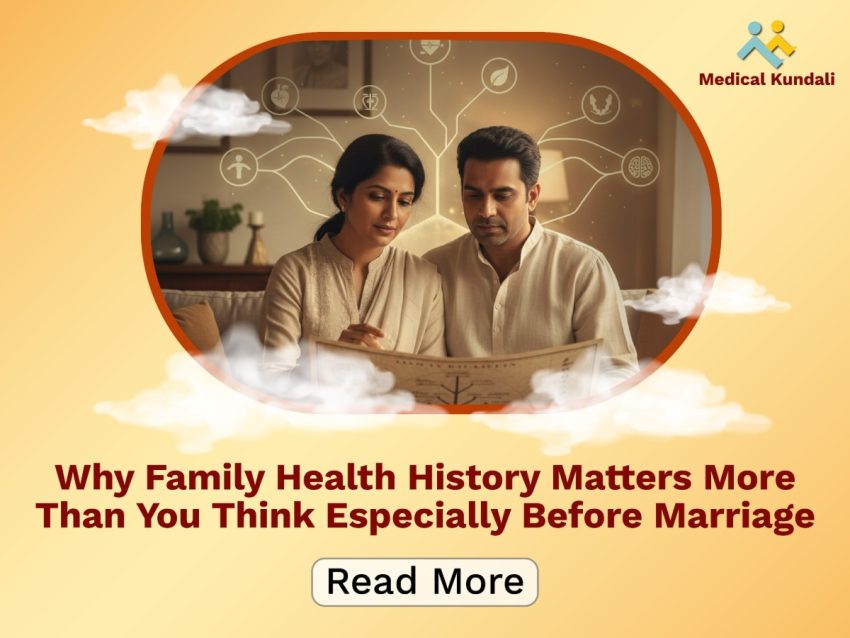
Small talk matters, so does health talk
In India, families often check gotra, caste, income and kundali before marriage, but we rarely check family health. That silence can be costly: emotionally, medically and financially. Knowing your family medical history is one of the simplest, most effective ways to reduce future health risks for your children and your family.
This isn’t about fear. It’s about preparation — early action, informed decisions and building a healthier future together.
What is a family health history?
A family health history is a simple record of medical conditions that appear across generations – parents, siblings, grandparents and cousins. It helps doctors estimate risks and recommend the right tests before conception or during pre-marital counselling.
Key things to note:
- Genetic conditions: thalassemia, sickle cell disease, G6PD deficiency and other inherited disorders.
- Chronic diseases: diabetes, high blood pressure, heart disease.
- Mental health: depression, bipolar disorder, addiction.
- Reproductive concerns: infertility, recurrent miscarriages, early menopause.
- Autoimmune & rare diseases: sometimes run in families and need specialist advice.
Why this is especially important before marriage
Marriage joins two family health legacies. If both partners carry the same hereditary change, their children may face increased risk of congenital or lifelong conditions. Knowing the family history helps you:
- Predict and manage risks early.
- Choose targeted screening and genetic counselling.
- Reduce unexpected medical and emotional burden later.
Many of these risks can be predicted and in some cases prevented or treated early when couples plan ahead.
Common hereditary and familial patterns seen in India
- Thalassemia (autosomal recessive): Carrier rates are significant in many regions. Screening before marriage or conception is widely recommended.
- Sickle cell disease (autosomal recessive): More prevalent in certain tribal and rural communities (states such as MP, Maharashtra, Odisha, Chhattisgarh).
- G6PD deficiency (X-linked): Often affects males and can be missed at birth.
- PCOS & hormonal disorders: Sometimes cluster in families and influence fertility.
- Mental health conditions: Family history raises risk but early support helps outcomes.
- Diabetes & hypertension: Family history increases risk; lifestyle changes can lower it.
A simple example
If both parents carry the beta-thalassemia trait, each pregnancy has a 25% chance the child may inherit a severe form of the condition. A short carrier test before marriage or conception can reveal this risk and open options: genetic counselling, prenatal testing, or assisted reproductive choices.
What to ask — gently and respectfully
Before you say yes, these are helpful questions to discuss with family or your partner:
- Has anyone in your close family had a diagnosed genetic condition?
- Any history of severe anemia, repeated transfusions or known carrier status?
- Are there cases of psychiatric illness, addiction or suicide?
- Have relatives had multiple miscarriages or unexplained infertility?
- Do several family members have diabetes, high blood pressure or thyroid problems at a young age?
Asking these is an act of responsibility — not nosiness.
Why families stay silent (and how to change it)
People avoid these conversations because of fear of rejection, stigma, or simply lack of awareness. At Medical Kundali we meet families where they are — no blame, only practical steps: a family history worksheet, targeted testing and compassionate counselling.
How Medical Kundali helps you plan
Medical Kundali offers:
- A private family health history worksheet and guidance.
- Clear explanation of which tests make sense (carrier screening, targeted genetic tests).
- Non-judgmental medical counselling and referrals to trusted specialists.
- Help turning medical facts into real-life decisions you can live with.
Doctor’s note
“I’ve seen many cases where parents appeared healthy — but the baby was born with a condition that could have been anticipated. Early family history and counselling make a big difference.” — Dr. Manish R., Genetic Counselor
Final thought
Before you say yes, take a moment for a few health questions. They could make pregnancy safer, reduce surprises and give your child a healthier start. The best match is made with love and with information.